Did you know that your thoughts have a direct influence on your emotions and behavior?
Let me give you an example to help you understand the concept of behavioral activation.
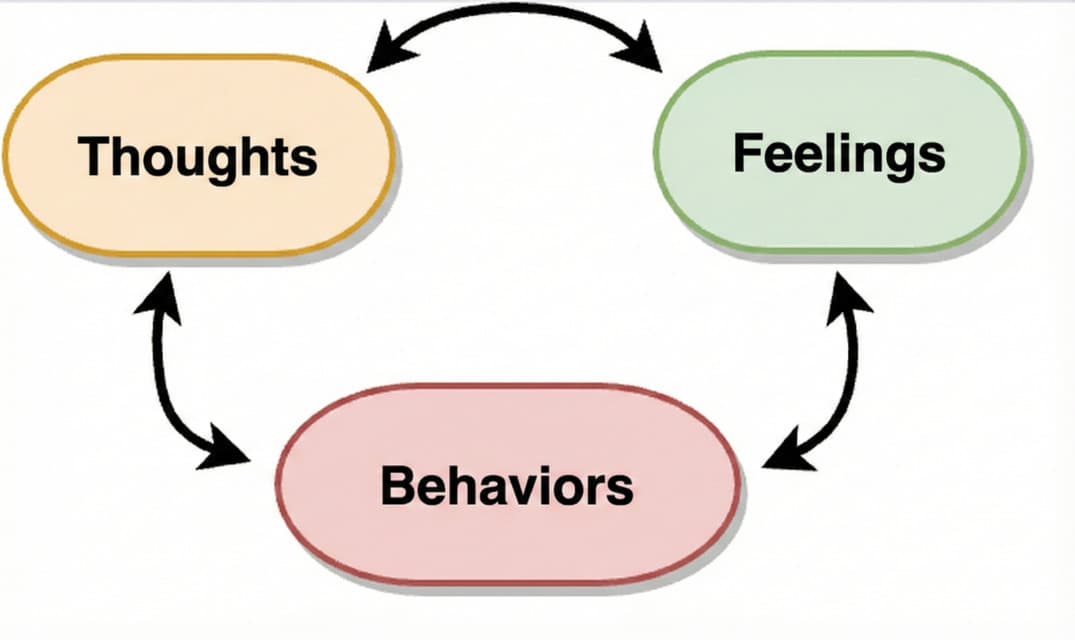
When you have a positive thought like: "Today is going to be a great day," a positive emotion is also triggered in you - happiness or excitement.
The opposite is also true. When you have a negative thought like: "My life is never going to get better," negative feelings become present, such as sadness or anxiety.
The thing is, all of this will also influence how you behave, without you even realizing it.
Looking at the first example, with positive thinking, you'll notice an improvement in your willingness to socialize with others or complete routine tasks.
In the second scenario, you'll see that negative thoughts trigger negative emotions, which in turn generate negative behaviors, such as always avoiding situations that might cause stress or not wanting to work.
In the image below, you can see how this relationship works:
Think about your daily activities and how they make you feel, positively or negatively:
"When I cook for my family, I feel happy."
"When I give up on going to a party, I feel sad."
It's important that you understand these feelings to identify the behaviors behind them, as they may be running on autopilot.
In the second statement, for example, a related behavior might be immediately declining an invitation to socialize, trying to avoid the feeling of sadness if you wanted to back out at the last minute.
Little by little, what can happen is that you distance yourself more and more from enjoyable activities, feel worse, and have increasingly negative thoughts.
This is how a vicious cycle is established.
How do you break this cycle? By activating your behavior!
To apply this technique, follow these steps:
- Observe the feelings caused in you by all the activities you set out to do and write them down somewhere you can review later.
- Also recall activities you used to do that brought you a pleasant feeling and write them down.
- Create a weekly plan including these pleasant activities in your routine. You can start slowly, with one scheduled activity for the week, and gradually add new ones.
- Don't limit yourself to elaborate activities like
Scientific studies show that this technique alone can reduce anxiety symptoms by approximately 50%1.