Why have a plan?
Many people think they just need willpower to overcome addiction.
But what really works isn't having more strength — it's having less friction.
And that's where a routine plan comes in.
When you have a light plan, with moments of rest, pleasure, and connection, gambling stops being your only escape valve. You start building a new way of living that makes sense for you.
It's not about a perfect life — it's about a life that works
One of the biggest traps is trying to create an ideal plan, exactly like someone else's. That only leads to frustration.
What psychology shows is that personalized plans, adjusted to your actual routine, increase the chances of long-term maintenance[1].
The secret is creating a sustainable week, which includes:
- Your obligations (work, studies, home)
- Your moments of pleasure (like we saw with micro-pleasures)
- Time with loved ones
- Maintenance activities (like exercise, breathing exercises, emotional support)
And most importantly: fill in advance the idle hours that were previously occupied by gambling. That's where the risk lies.
A plan in practice: what can it look like?
Imagine someone who used to gamble every Friday night. Now, they organize themselves like this:
- 📅 Morning: work
- 🍽️ 7 PM: dinner with a friend or favorite TV show
- 🚶♂️ 9 PM: walk or reading
Instead of arriving at the end of the week exhausted and vulnerable, this person already has a "contract" with themselves: a plan that protects them.
And the best part: they don't feel like they're depriving themselves — they feel cared for.
How to create yours?
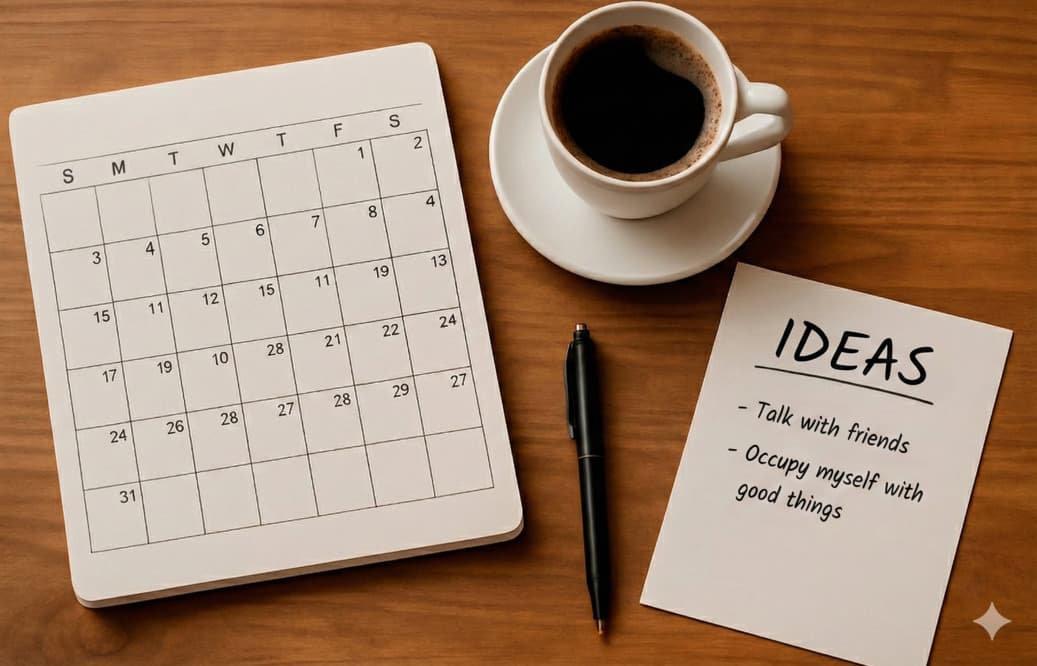
You can create this on paper, in a notepad, or in a calendar app. The important thing is:
- Start simple (don't try to fill every second)
- Prioritize what works for you (no magic formulas)
- Reserve time for emotional maintenance (breathing, support, hobbies)
- Plan for "triggers" in advance (e.g., what will you do Friday night?)
This plan will become your new foundation. A realistic map, not an idealized one.
Conclusion
Living without gambling isn't about giving up fun — it's about regaining control and true pleasure.
Planning isn't limiting yourself. It's freeing yourself from the improvisation that pushed you toward addiction.
Your plan doesn't need to be perfect.
It just needs to be yours.
Scientific References
[1] Moos RH, Moos BS. Protective resources and long-term recovery from substance use disorders. Drug and Alcohol Dependence. 2007. https://pubmed.ncbi.nlm.nih.gov/16769181/