What causes insomnia?
There are two types of insomnia, primary and secondary1.
- Primary insomnia is insomnia that cannot be attributed to any other environmental condition (such as drug or medication abuse) or medical condition, meaning when you have only insomnia and nothing else. It is estimated that 10-15% of people with chronic insomnia have primary origin2.
- Secondary insomnia is when insomnia symptoms result from these other environmental conditions (substance influence), mental conditions (such as depression, anxiety, among others) and other physical conditions (such as diabetes, fibromyalgia, etc.). It is estimated that 85-90% of people with chronic insomnia have secondary origin2.
Therefore, if you have insomnia, there is a good chance that you have some other condition. Understanding that this other condition exists and how it may be affecting you are fundamental to your sleep improvement program.
Mental conditions3456
Unfortunately, there is still little awareness and even prejudice in our current society about the mental conditions below. Such conditions are diseases, so there is no shame in seeking help if there is suspicion of any of them.
General anxiety
Generalized anxiety disorder is characterized by persistent feelings of worry, apprehension, or discomfort. These feelings result from exaggerated sensations regarding the problems faced by the person.
Although it is a common feeling in adults, the diagnosis of anxiety comes from the person experiencing these excessive worries very frequently for a period of six months or more.
Depression
It is estimated that 90% of people with severe depression also have sleep problems.

It is important to know that symptoms of depression (such as low energy, loss of interest or motivation, feelings of sadness or hopelessness) and insomnia can be linked and one can worsen the other (see schematic model below).
Laboratory studies have shown that depressed people spend less time in slow-wave sleep and may enter REM sleep more quickly early in the night.
If you have suicidal thoughts, contact a professional for help. The CVV (Centro de Valorização da Vida) provides emotional support and suicide prevention, serving voluntarily and free of charge all people who want and need to talk, under total confidentiality by phone, email and chat 24 hours every day. For information about the service, call 188.
Bipolar disorder
Bipolar disorder is characterized by alternation between periods of depression and periods of intense mood (mania). In this disorder, sleep loss can exacerbate or induce manic symptoms or temporarily relieve depression. During a manic episode, a person may not sleep for several days. Such occurrences are often followed by a "crash" during which the person spends most of the next few days in bed.
Schizophrenia
Schizophrenia is characterized by thoughts or experiences that seem to be out of reality. Some people with schizophrenia sleep very little in the initial more severe stage of an episode. Between episodes, their sleep patterns are likely to improve, although many people with schizophrenia rarely get a normal amount of deep sleep.
Dementia (Alzheimer's)
Dementia is characterized by loss of brain function, for example memory loss. Alzheimer's disease and other forms of dementia can impair sleep regulation and other brain functions. Some people with dementia also have sundown syndrome. Unlike what most people do, people with this syndrome tend to become agitated at dusk, which directly impacts sleep.
While Alzheimer's worsens sleep, the way to prevent the disease is by sleeping well! This is because during sleep the glymphatic system acts to "clean" the brain7.
Epilepsy
People with epilepsy - a condition in which a person is prone to seizures - are twice as likely to suffer from insomnia. Brain wave disturbances that cause seizures can also cause deficits in slow-wave sleep or REM sleep.
About one in four people with epilepsy has seizures that occur mainly at night, causing disturbed sleep and daytime sleepiness. Sleep deprivation can also trigger seizures.
Parkinson's disease
People with Parkinson's have tremors and difficulty moving around. Almost all people with this disease have insomnia. Some arousals are caused by tremors and movements caused by the disease, and others seem to result from the disease itself. As a result, daytime sleepiness is common.
Physical conditions8 9
Diabetes
Diabetes is a common chronic disease caused by insufficient production or poor absorption of insulin, which regulates blood glucose.
People with diabetes whose blood sugar levels are not well controlled may have sleep problems due to a frequent need to urinate, excessive night sweating, or symptoms of hypoglycemia (low blood sugar).
Reflux
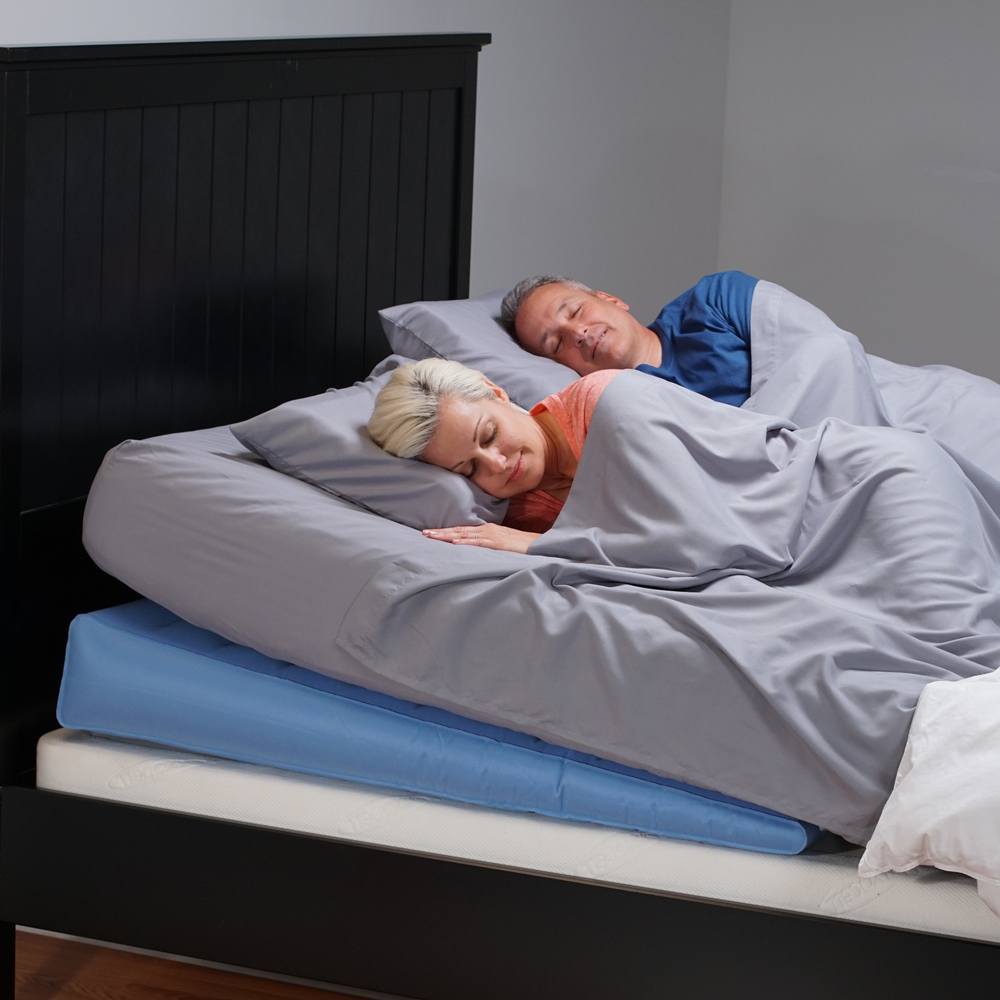
Reflux is a disease in which stomach acid can come back up through the esophagus causing that burning sensation in the chest or throat. Lying in bed usually worsens reflux because it facilitates this backflow.
As seen previously, one way to avoid this problem is to avoid heavy or fatty foods at night.
Another way to avoid reflux is to elevate the upper body, with some support under the mattress in its upper part.
Obstructive sleep apnea
Apnea is characterized by a breathing interruption during sleep prevalent in men. Due to lack of air, there are several awakenings, often not perceived by the person, but which result in fragmented and poorly restorative sleep.
For this reason, people who suffer from apnea may sleep for several hours and still feel tired when getting out of bed.
Musculoskeletal disorders
The main musculoskeletal conditions that disrupt sleep are arthritis and fibromyalgia.
Arthritis is an inflammation of one or more joints, causing pain and stiffness. It can make sleep difficult when the arthritis sufferer changes position, which causes pain and swelling in the joints during the night.
Fibromyalgia is a condition in which a person feels pain throughout the body for long periods. It is common for people with this condition to report waking up tired and as stiff and sore as a person with arthritis.
Researchers who analyzed the sleep of fibromyalgia patients found that at least half have abnormal deep sleep, in which slow brain waves are mixed with waves generally associated with a relaxed waking state.
Nocturia
Nocturia is the need for a person to get up during the night several times to empty the bladder, thus interrupting sleep.
This condition occurs mainly in older people, with mild cases causing a person to wake up at least twice during the night, and in severe cases a person may get up five or six times.
Environmental conditions 10
For more information on substances that can interfere with your sleep, check directly in the posts:
The other vicious cycle
Here at Vigilantes do Sono we have already talked about insomnia being the result of a vicious cycle where there are thoughts that cause negative emotions, which make you behave inappropriately, which in turn only reinforces that initial negative thought.
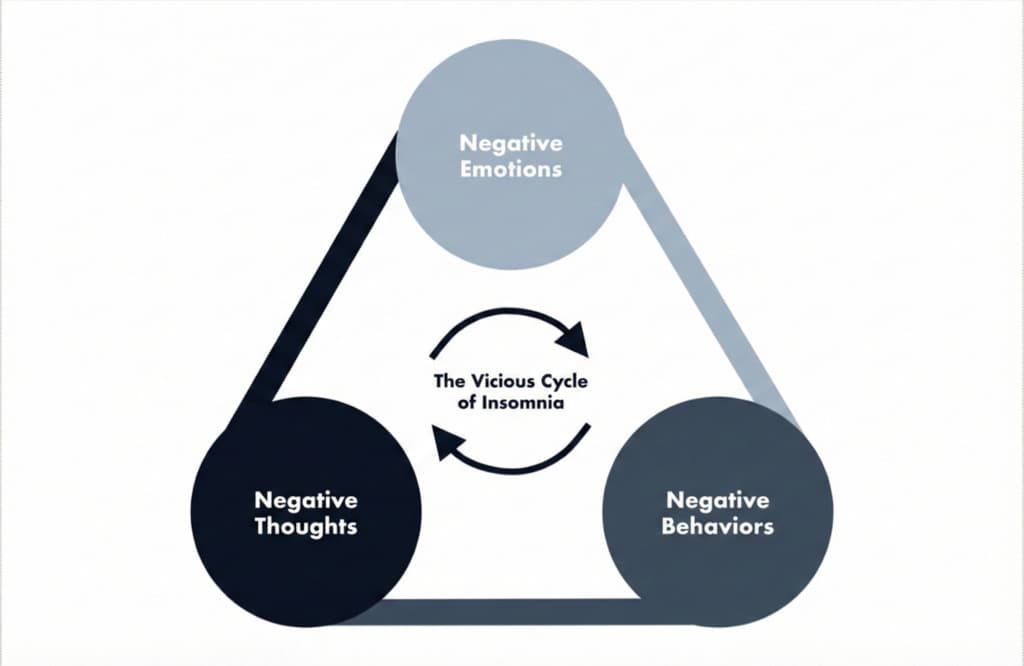
The same can occur for the relationship between insomnia and another possible medical condition you may have, especially in cases of depression and anxiety.
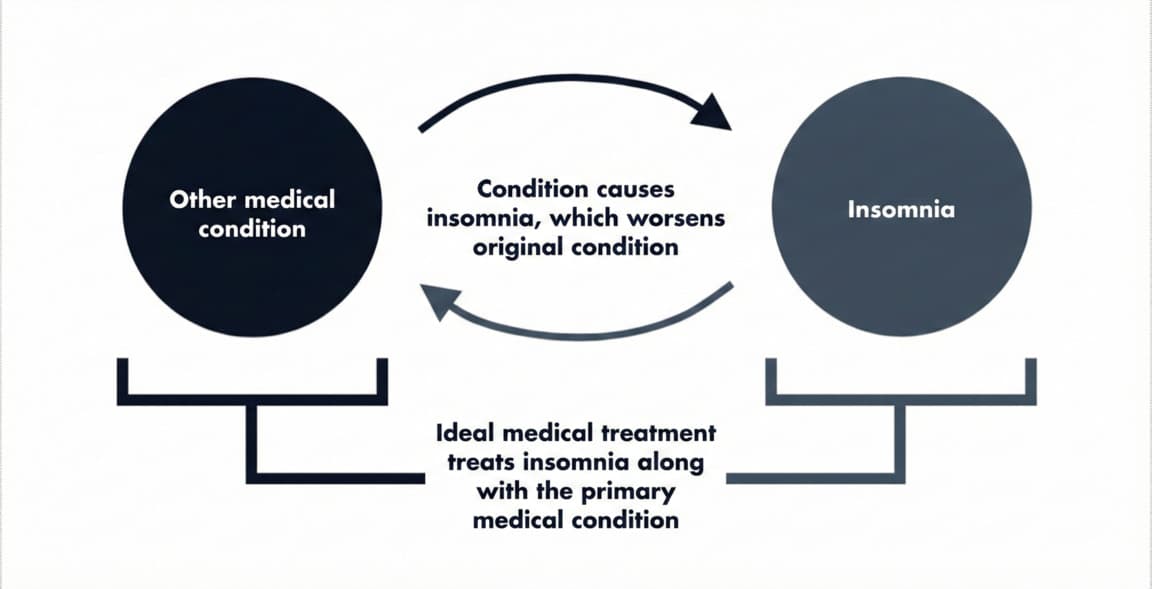
In this scenario, insomnia can worsen another condition, which in turn can worsen insomnia.
Many doctors still take the approach of treating only the primary condition, hoping that insomnia will be resolved once the primary condition no longer exists, however, according to Michelle Drerup, director of behavioral sleep medicine at the Cleveland Clinic (one of the largest hospitals in the United States), the ideal is to treat insomnia along with the primary medical condition11, since in many cases, even after the initial chronic condition (whether mental or physical) has improved, insomnia remains.
What to do from here?
There is evidence that CBT-I can also be beneficial in helping to treat other medical conditions, such as anxiety and depression12, but the focus of this program is centered on improving insomnia, so if you are concerned about any of these other conditions, we recommend contacting a specialist doctor to be able to treat the other condition in parallel.
- https://aasm.org/resources/factsheets/insomnia.pdf↩
- https://www.ncbi.nlm.nih.gov/pmc/articles/PMC3195148/↩
- https://www.ncbi.nlm.nih.gov/pmc/articles/PMC2504337/↩
- https://www.ncbi.nlm.nih.gov/pubmed/2788211↩
- https://www.ncbi.nlm.nih.gov/pubmed/9306291↩
- https://www.ncbi.nlm.nih.gov/pubmed/7846462↩
- https://www.npr.org/sections/health-shots/2016/01/04/460620606/lack-of-deep-sleep-may-set-the-stage-for-alzheimers↩
- https://www.ncbi.nlm.nih.gov/pubmed/9605781↩
- https://www.ncbi.nlm.nih.gov/pubmed/11560179↩
- https://www.elsevier.com/books/principles-and-practice-of-sleep-medicine/kryger/978-1-4160-6645-3↩
- https://www.healthline.com/health/tips-for-ending-sleep-pain-depression-cycle#1↩
- CBT-I Evidence↩


