How to promote mental health in the workplace?
Maintaining mental health is important for workplace productivity. When employees have mental health problems, it can interfere with their ability to concentrate and perform their tasks efficiently. This leads to low productivity, increased absences, and even workplace accidents. The opposite is also true—an employee who feels good about themselves tends to be more motivated, engaged, and less prone to errors. – Learn more in our article about mental health and productivity by clicking here. Once a mental disorder is established, it requires treatment, which can vary according to the type of disorder, severity, and the individual employee, but it's something that requires a bit more time.
Is it better to invest in prevention or treat those who need it most?
Before answering this question, it's important to understand that mental health is a spectrum: there isn't just a sick side and a healthy side—we all move between both sides depending on what happens in our lives. Talking about prevention in the workplace tends to be better received by employees, after all, there's still a lot of stigma when we talk about mental health, and nobody likes (or wants) to feel sick. Cases of anxiety, depression, or burnout, once established, are harder to recover from, but they are completely treatable and are well worth it for the company:
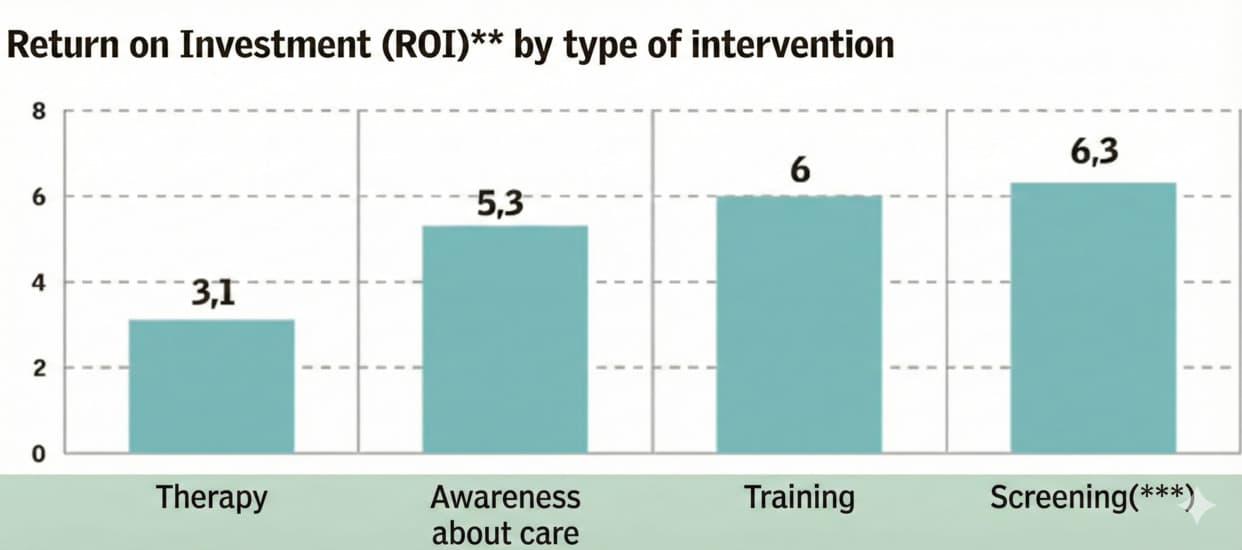 Source: 1
Prevention, on the other hand, can also bring benefits that extend beyond the office walls to your employees' families, who will feel more prepared and empowered to deal with this topic if they notice something at home. When in doubt about who to treat first: take care of both.
3 practical tips to change the game today!
Check out our selection of actions that can help you start changing this scenario within your organization today!
Understand your reality
The first thing you need to do is understand the levels of anxiety, sleep quality, depression, and stress within your organization. And only one person can help you with this metric: the employee. Through a quick online questionnaire backed by the world's leading health guidelines, Vigilantes do Sono makes it possible to quantify the problem and develop strategies that truly make sense for your company. Talk to one of our consultants by clicking here.
Create rituals
At first glance, it may seem like a waste of time, but in the medium and long term, rituals will be your strong allies in the pursuit of psychological safety for your team. Let's look at some examples:
-
Onboarding ritual: the arrival of a new team member is a defining moment—this employee is entering an unfamiliar environment, full of uncertainties and anxiety. They need to understand that they are welcome and truly part of the team. Invest in actions that acknowledge this moment, such as:
-
A social media post announcing the new employee(s) – it's important to include a photo so they can easily recognize themselves in the communication.
-
Encourage the team to send welcome messages to the new employee – this can be notes on the employee's desk, messages through your communication tool, or in whatever way your creativity (and limitations) allow.
-
-
Recognition ritual: there's no way around it—everyone likes to be publicly recognized. Implement regular communications to value your employees, whether for a job well done, actions that reinforce company values, or even for length of service.
-
Integration ritual: being ourselves is difficult for most people, and this trust can take a very long time to develop if there's no intention for it to happen. Integration rituals serve to stimulate interpersonal relationships within your team and should preferably be done outside the work environment and in activities that aren't common in these people's daily lives, such as: taking a surfing lesson or participating in a social cause activity.
Measure and monitor
You'll only know how and when to act if you have a metric for it. Some examples:
-
Productivity metrics: when something isn't going well, productivity is one of the first things to be affected, so it's important that you establish what your productivity metrics are and closely monitor fluctuations.
-
Health metrics: there's no point in creating a thousand actions that encourage improving your employees' mental health or even having a program dedicated to it if you're not sure they're working. The return on investment (ROI) of your health initiatives should be closely monitored.


