Autogenic training is a relaxation technique created by German psychiatrist Johannes Heinrich Schultz.
The origin of Schultz's technique came from his observation that intelligent and sufficiently independent patients who underwent hypnotherapy sessions learned to self-hypnotize after several hypnosis sessions with their doctor, managing to enter a state of relaxation by experiencing feelings of heaviness and warmth in their limbs.
Knowing this, he sought to recreate this state in people to reduce tension and anxiety, in a way that people could apply to themselves.
From 1932 to the present day, this technique has spread and is now used worldwide. Even NASA uses it with their astronauts 1 2.
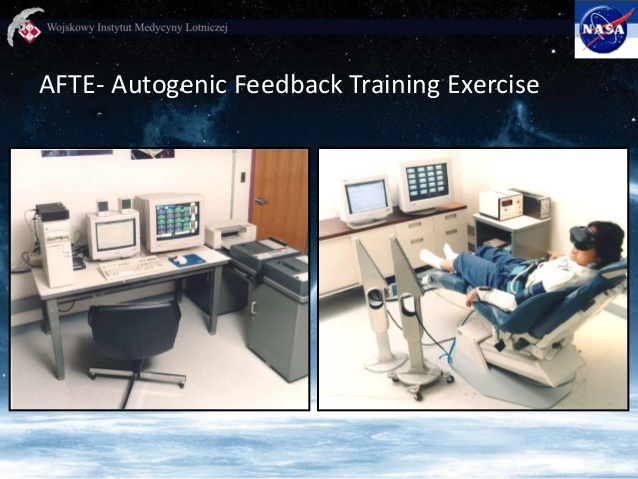
Autogenic training
In this training, you teach your body to respond to your verbal commands. These commands "tell" your body to relax, control breathing, blood pressure, heart rate, and body temperature.
The goal is to achieve a state of deep relaxation and reduce stress and anxiety related to insomnia.
Once you learn the technique, you can practice it regularly to improve your sleep or whenever you want relief from stress and anxiety symptoms.
Since this training can take weeks to master, we will recommend a simplified version of autogenic training proposed in the International Journal of Psychiatry 3.
Step-by-step
Follow these steps to practice autogenic training:

- Get into a comfortable position, either lying down or sitting with your spine straight.
- Practice two to three cycles of deep breathing.
- Let your shoulders relax, keep your breathing calm and then focus your attention on your right arm
- Imagine that your right arm is heavy and that there is an object on top of it
- Repeat 5 to 8 times to yourself, mentally the words
my arm is heavy, pleasantly heavy
- Once you notice your arm feeling heavier, repeat once to yourself
I am calm now, calm
- Next, imagine that your right arm is warm and that it is immersed in warm water
- Repeat 5 to 8 times to yourself the words:
arms warm, pleasantly warm
. - Once you notice the warmth in your arm, repeat once to yourself
I am calm now, calm
- Repeat this process for both arms and both legs.
Suggestions:
- Unlike other relaxation exercises, this training is shorter, but the recommendation is to practice it twice a day (e.g., first thing in the morning and right before going to bed).
- Practice this exercise outside of your bed if possible (remember stimulus control).
- Without regular practice, autogenic training probably won't have an effect. For this reason, only motivated people who are committed to learning will likely benefit from this training. But for those who master the technique, it works and can be an effective solution for insomnia.
- Stop autogenic training if you experience feelings of extreme anxiety or restlessness or any other adverse effects during or after practicing this training.
- This training is especially useful for people who have localized pain that prevents them from sleeping. The training focused on feeling heavy and warm can be applied to the area with pain.

How does this training help you sleep?
The way autogenic training works is not fully understood, but its effects on the body are measurable. Experts believe this training works similarly to hypnosis and biofeedback.
The exercises develop communication between mind and body, allowing you to influence bodily reactions that normally cannot be controlled, such as increasing blood flow to your limbs and controlling heart rate and body temperature.
What is the scientific evidence?
Autogenic training is one of the most well-established relaxation techniques in the scientific literature for helping with insomnia.
A Portuguese study 4 with 28 patients showed subjective improvement in sleep quality (that is, in the patients' perception, their sleep had improved) after practicing autogenic training.
A larger study with 153 patients with insomnia 5 was able to differentiate autogenic training from placebo, noting improvements in:
- decreased time to fall asleep
- falling asleep faster after waking up
- patients woke up more rested
Another more recent study 6 showed that autogenic training produced lasting gains in reducing time to fall asleep, even 6 months after practicing autogenic training.
- https://ntrs.nasa.gov/archive/nasa/casi.ntrs.nasa.gov/20050220674.pdf↩
- https://ntrs.nasa.gov/archive/nasa/casi.ntrs.nasa.gov/19940011064.pdf↩
- https://www.polbr.med.br/ano06/artigo0706.php↩
- https://www.sciencedirect.com/science/article/abs/pii/S0924933815313730#↩
- https://autogenic-therapy.org.uk/wp-content/uploads/2013/11/AT-Behavioural-Approach-InsomniaStudy-2011.pdf↩
- https://psycnet.apa.org/record/1974-32970-001↩


