Progressive muscle relaxation training was created by Edmund Jacobson in the 1930s and is based on his premise that mental calm is a natural result of physical relaxation.
By tensing your muscles, you cause them to burn through energy-rich molecules and oxygen. This causes a temporary expansion of blood vessels, providing additional nutrients to your muscles.
The sudden relaxation gives your muscles a moment to recover, providing greater relief than before.
As you progress, the tension and relaxation cycle builds up, triggering a response from your autonomic nervous system, promoting a sense of peace and relaxation.
The more you practice this training, the stronger and more effective your body's relaxation response will become.
Step-by-step guide
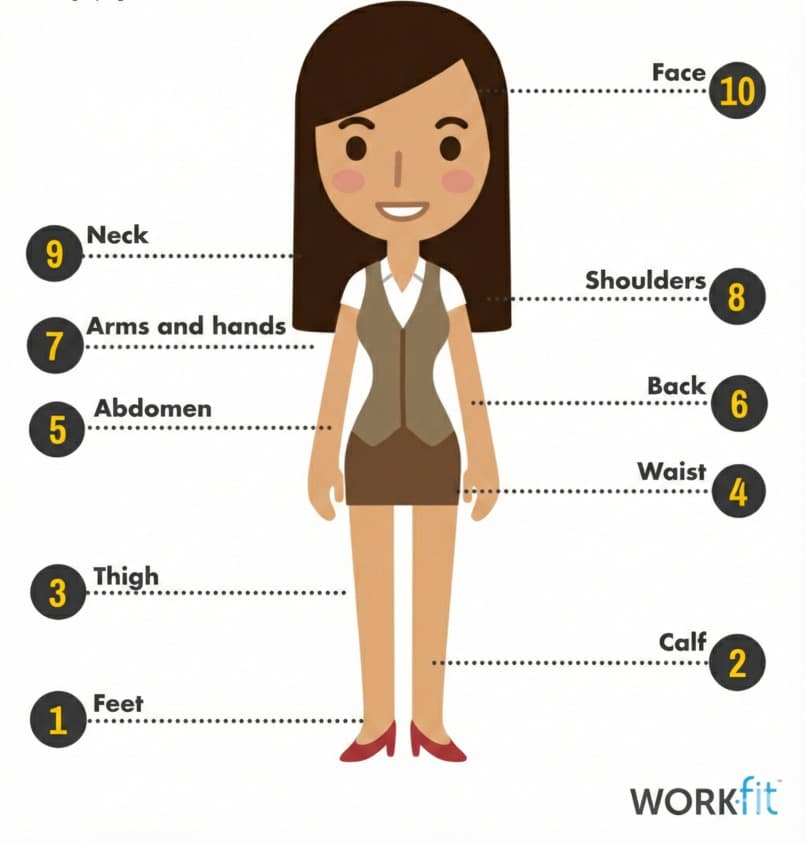
Many practitioners recommend tensing and relaxing the muscle groups in your body, one at a time, in a specific order, usually starting with the lower limbs and ending with the face.
You can practice this training sitting or lying down, wearing comfortable clothes and in a quiet, distraction-free location.
- Find a comfortable position, take a minute to breathe slowly and deeply.
- As you inhale, tense a muscle group (for example, the upper thigh) for 5 to 10 seconds, exhale and suddenly release the tension in that muscle group.
- Give yourself 10 to 20 seconds to relax and then move on to the next muscle group (for example, your glutes).
- As you release the tension, try to focus on the changes you feel when the muscle group is relaxed.
- Gradually work your way up the body, tensing and relaxing the muscle groups—there are 10 in total as shown in the image below.
Practice this exercise for 10 to 15 minutes per day to reap the benefits of this training. If you feel comfortable, try practicing twice a day—there are interesting benefits to this routine. We suggest using a gentle alarm to help you keep track of the exercise time and always do it outside your bedroom—this is important. If you're interested in doing a guided session (with a specialist narrating what you need to do), search on Google or YouTube for the term: Progressive Muscle Relaxation.